Walls That Hold Soil and Control Water
Covington Hardscape builds retaining walls and structural landscaping in Longview, Texas for properties with sloped yards, erosion issues, and elevation changes.
When your yard in Longview has a slope that washes out after heavy rain or loses soil along the property line, a retaining wall gives you a permanent solution that stabilizes the ground and creates usable flat space. Covington Hardscape installs structural and decorative walls using block, stone, or poured concrete depending on the height, load, and look you need.
The service includes site assessment, wall design based on soil conditions and drainage, proper reinforcement and backfill, and installation that meets local code requirements. You choose the material and finish, and the crew handles everything from excavation to drainage placement so water does not build up behind the wall.
If you are dealing with a sloped yard or erosion in Longview, contact Covington Hardscape to schedule a site visit and discuss what kind of wall will work best.
How the wall gets built and reinforced
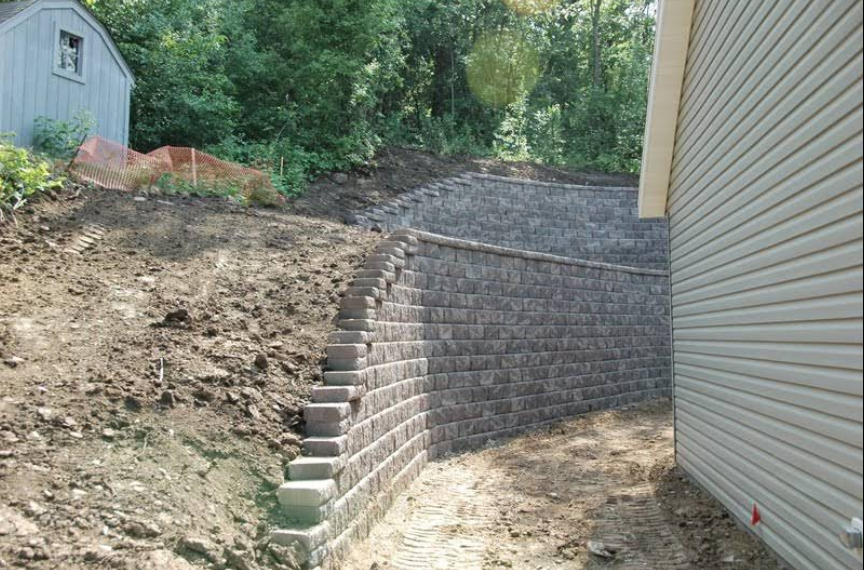
The crew begins by digging a trench below the frost line, setting a compacted gravel base, and placing the first course of block or stone. In Longview, drainage is installed behind the wall using perforated pipe and gravel backfill to relieve water pressure and prevent the wall from shifting.
Once the wall is up, you will notice the slope is held in place, water no longer carves channels through the yard, and you have level ground where there used to be a hillside. The wall stays plumb and stable because it is built with proper reinforcement and drainage from the start.
All walls include geogrid reinforcement for taller installations and are built to local code and site-specific load requirements. The work does not include landscaping, planting beds, or irrigation behind the wall, but the structure is ready for those additions once complete. This brings up the typical concerns homeowners have before committing to a retaining wall.
What people need to know before building a wall
Homeowners in Longview often want to know how tall a wall can be without a permit, what materials last longest, and whether the wall will stop erosion completely.
Covington Hardscape builds retaining walls in Longview that control erosion, stabilize slopes, and create level outdoor space with drainage systems that keep the structure sound over time. If your yard needs a retaining wall, get in touch to schedule a site assessment and review material options.