
Interlocking Pavers That Stay Put and Look Sharp
Covington Hardscape installs paver patios and driveways in Longview, Texas for homeowners who want color, pattern, and surfaces that handle weight without cracking.
When you want a driveway or patio in Longview that does not crack like concrete and gives you flexibility in design, interlocking pavers are a durable option that holds up under vehicles, foot traffic, and seasonal temperature swings. Covington Hardscape installs paver systems with proper base preparation, edge restraints, and joint stabilization so the surface stays level and tight over time.
The service includes excavation, compacted gravel base installation, paver placement in your chosen pattern and color, and polymeric sand application to lock the joints. You also get paver repairs and replacements for existing surfaces that have settled or shifted. Every installation is built to support the load it will carry, whether that is foot traffic on a patio or daily vehicle use on a driveway.
If you are planning a paver patio or driveway in Longview, reach out to Covington Hardscape to discuss patterns, materials, and how the installation process works.
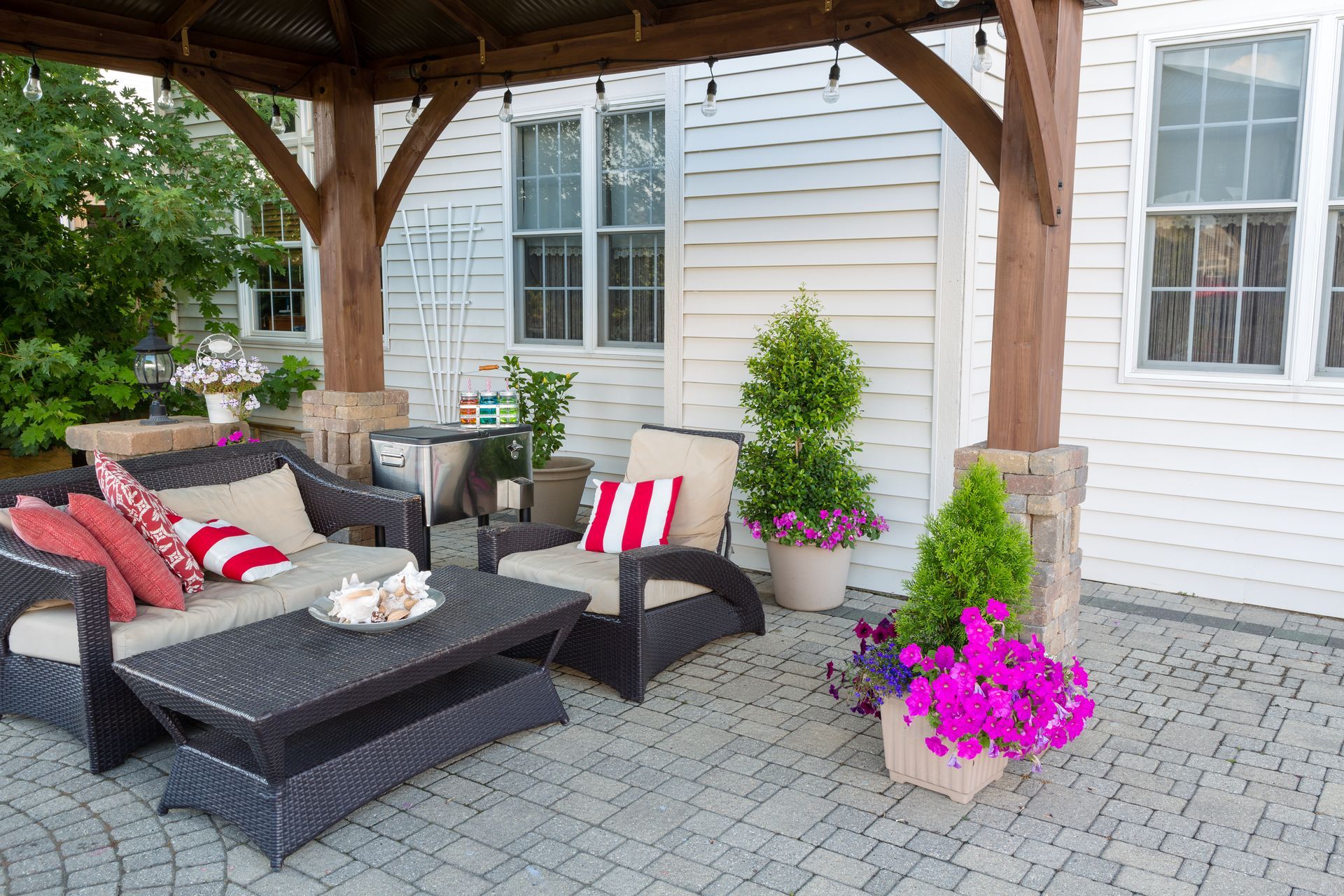
How the pavers get set and secured
The crew excavates the area to the required depth, installs a compacted gravel base, and lays a layer of bedding sand that the pavers sit on. In Longview, proper base thickness and compaction are critical to prevent settling, especially on driveways where vehicles add load.
Once the pavers are placed in the pattern you selected, edge restraints are installed around the perimeter to keep the system from spreading. Polymeric sand is swept into the joints and activated with water, which hardens and locks the pavers together. You will notice a smooth, level surface with tight joints that do not allow weeds or shifting, and if a paver ever cracks, it can be lifted and replaced without disturbing the rest of the surface.
All installations include edge restraints and joint stabilization to maintain the integrity of the system. The work does not include sealing unless requested, but the pavers are ready for a sealer application once the joints have cured. This sets up the common questions homeowners ask before moving forward.
What you should understand before choosing pavers
People in Longview often want to know how pavers compare to concrete, whether they can be sealed, what happens if one cracks, and how long the installation takes.
Covington Hardscape installs paver patios and driveways in Longview with compacted bases, edge restraints, and polymeric sand to keep the surface stable, tight, and looking sharp for years. If you are ready to start your project, contact us to review patterns and schedule the work.